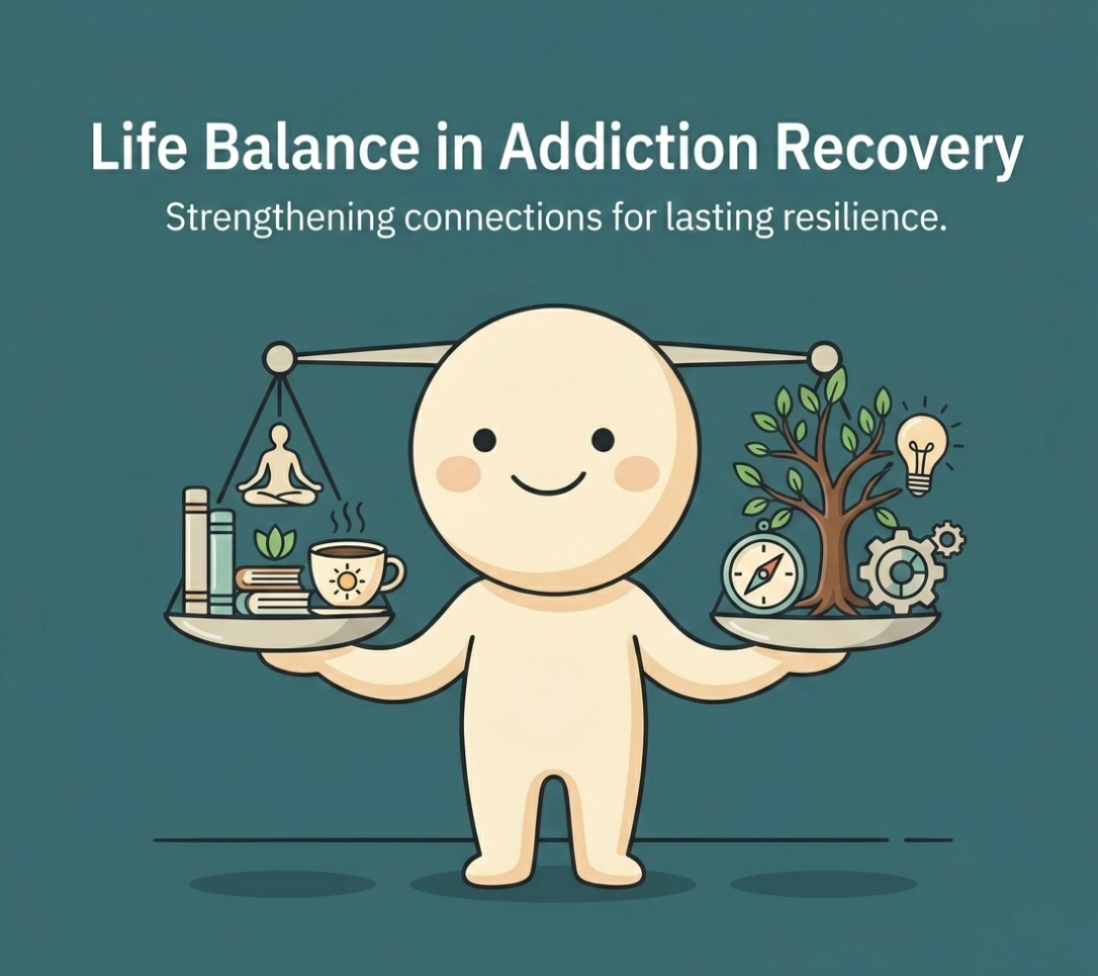
Achieving and maintaining a balanced life is crucial for individuals in addiction recovery. Addiction can often lead to neglect of personal responsibilities, relationships, and self-care. As an addiction recovery coach and sober companion, I work with individuals to navigate the challenges of recovery and the importance of establishing a healthy balance in all areas of life.
Why Life Balance Matters in Recovery
In addiction recovery, achieving and maintaining life balance is not just a luxury but a necessity. By prioritising self-care, relationships, work, and leisure activities, individuals can build a strong foundation for lasting recovery. A balanced life helps prevent relapse by reducing stress, enhancing overall well-being, and providing a sense of fulfilment. Recognising the significance of life balance empowers individuals to make conscious choices that support their recovery journey.
Tips for Finding Balance in Daily Life
Create a daily routine
Include time for self-care activities such as exercise, meditation, and healthy eating.
Prioritise your relationships
Set boundaries and surround yourself with supportive individuals.
Allocate time for meaningful work
Whether paid work or volunteering, choose activities that align with your values and interests.
Incorporate leisure activities
Make time for things that bring you joy and relaxation.
Practise self-compassion
Be patient with yourself as you navigate your recovery challenges.
Work-Life Balance in Recovery
Balancing work responsibilities with self-care and personal activities is essential for reducing stress and preventing burnout. Prioritise setting healthy boundaries in the workplace, such as limiting overtime hours and avoiding high-stress situations. Allocate time for relaxation and leisure activities outside work to recharge and maintain your well-being. Remember that your mental and physical health is just as important. Finding harmony between work and personal life can create a supportive environment that prioritises your recovery and overall well-being.
Self-Care Practices for Recovery
Self-care is a crucial component of maintaining life balance and supporting addiction recovery. Incorporate mindfulness meditation, exercise, adequate sleep, and healthy eating into your daily routine. These activities can help reduce stress, improve mental clarity, and enhance overall well-being.
Investing time in self-care is not selfish but necessary for your continued growth and recovery.
Building Your Support System
In addiction recovery, the role of support systems cannot be overstated. A recovery coach and therapist are part of this support system. Surround yourself with individuals who understand your journey and provide encouragement and positivity. Engage with support groups, therapy sessions, or trusted friends and family members who uplift and motivate you. Communicate openly about your challenges and victories, as sharing your experiences can alleviate feelings of isolation and strengthen your resolve.
If you’re unsure whether working with a professional coach is the right step, this page can help you decide. You can also read what clients say about working with me.
Recovery is not a destination but a continuous journey. By prioritising self-care, setting boundaries, practising mindfulness, and utilising support systems, individuals can navigate the challenges of recovery with resilience and determination. Remember that setbacks are a natural part of the recovery process, be kind and patient with yourself.