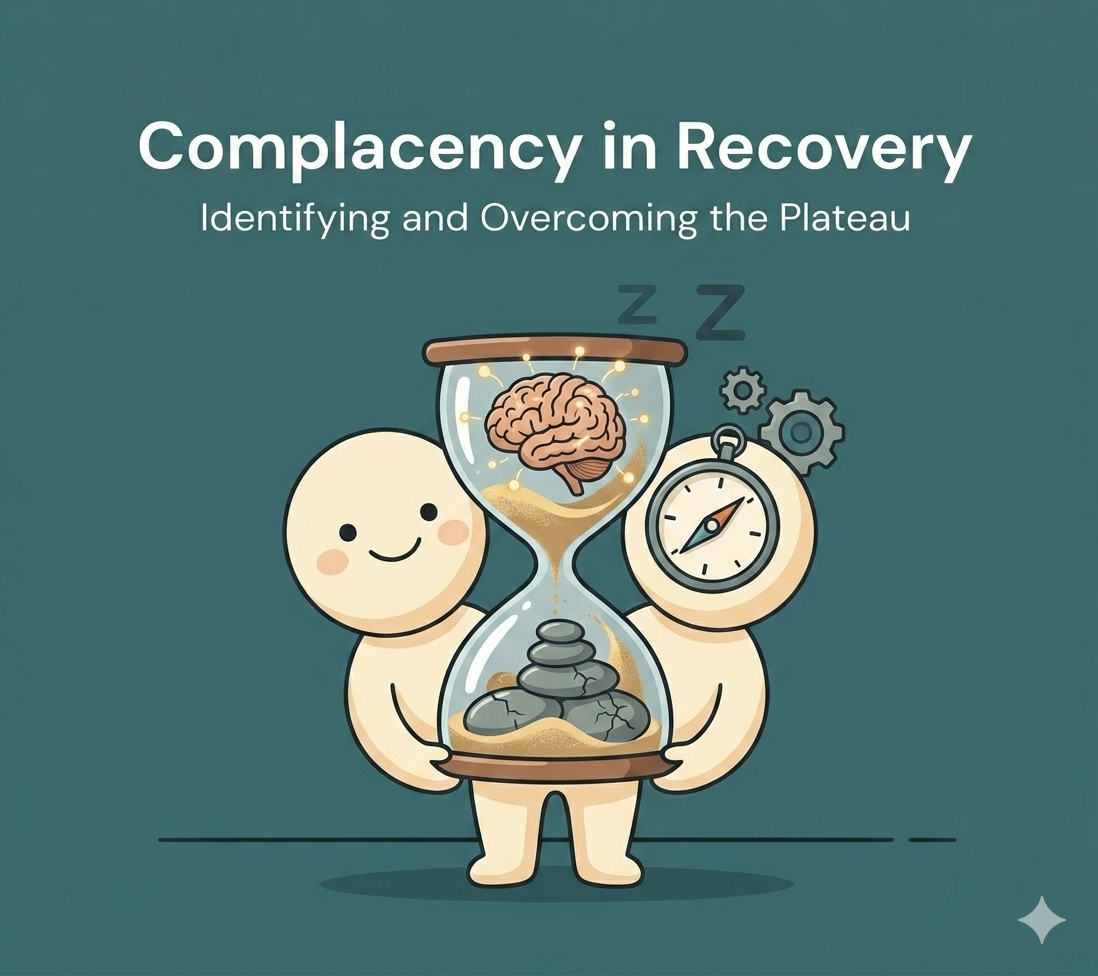
Understanding Complacency in Recovery
As an addiction recovery coach, I’ve witnessed firsthand the challenges posed by complacency in the journey towards recovery. Having experienced it myself, I fully grasp its subtle yet profoundly influential impact. Complacency can creep in quietly, often when things are going well, and it can undermine the very progress you’ve worked so hard to achieve.
Signs of complacency include:
- Skipping or reducing attendance at support meetings
- Neglecting self-care routines that once felt essential
- Feeling overconfident about your ability to handle triggers
- Losing interest in personal growth and recovery goals
- Withdrawing from your support network
- Letting boundaries slip with people or situations that were once off-limits
The Dangers of Complacency
From my work with clients, I’ve seen several risks associated with complacency:
- Increased vulnerability to relapse, when your guard is down, old patterns can resurface quickly
- Emotional stagnation, without active engagement, personal growth slows or stops
- Relationship strain, complacency can affect how you show up for the people around you
- Loss of purpose, the motivation that drove your early recovery can fade without nurturing
Strategies to Combat Complacency
Based on my experience coaching people in recovery, here are some effective strategies to keep complacency at bay:
Set new goals regularly
Recovery doesn’t end when the acute phase is over. Keep challenging yourself with fresh goals, personal, professional, or relational.
Stay connected to your support network
Isolation is complacency’s best friend. Keep attending meetings, stay in touch with your coach, and maintain meaningful relationships.
Practise gratitude and reflection
Regularly remind yourself of how far you’ve come and what you’ve gained. Journalling can be a powerful tool for this.
Embrace discomfort
Growth happens outside your comfort zone. If everything feels easy, it might be time to stretch yourself.
Revisit your ‘why’
Reconnect with the reasons you started your recovery journey. What mattered to you then? Does it still drive you now?
A Coach’s Perspective
I’ve seen these strategies transform lives. Clients who actively work against complacency often feel more engaged in their recovery, experience personal growth, and develop stronger resilience against relapse.
Remember, recovery is a journey. It’s normal to face challenges and setbacks along the way. The key is to recognise when complacency is setting in and take proactive steps to re-engage with your recovery process. If you’re wondering whether working with a professional could help you stay on track, read more about whether addiction recovery coaching is right for you.
You might also find it useful to explore ongoing sober companion support if you feel you need more regular accountability between sessions.
Don’t let complacency derail your progress. Stay vigilant, stay engaged, and remember why you started this journey. Your future self will thank you for your continued effort and dedication. If you’re interested in working together to strengthen your recovery and overcome complacency, please reach out.